
Tennis Elbow & Golfer’s Elbow Treatment in Ellicott City, MD
You do not have to play tennis or golf to get these. Tennis elbow and golfer’s elbow are tendon problems on the outer and inner elbow, and most people who have them got there through everyday gripping, lifting, typing, and trade work. The catch is that they rarely just rest away, and the wrong approach can drag them out for a year. At Revive Physical Therapy, you work one-on-one with a licensed physical therapist who treats the tendon the way tendons actually recover. With appointments within 24 hours, weekend hours, and two Ellicott City locations, relief can start this week.
Request Your Evaluation
Who Our Elbow Pain Program is For
Our tennis elbow and golfer’s elbow program serves adults across Ellicott City and Howard County whose elbow pain has started interfering with ordinary tasks: the office worker whose forearm burns by the end of a typing day, the tradesperson whose grip has become a liability, the new parent lifting a baby dozens of times a day, and, yes, the racquet and club athletes the conditions are named after.
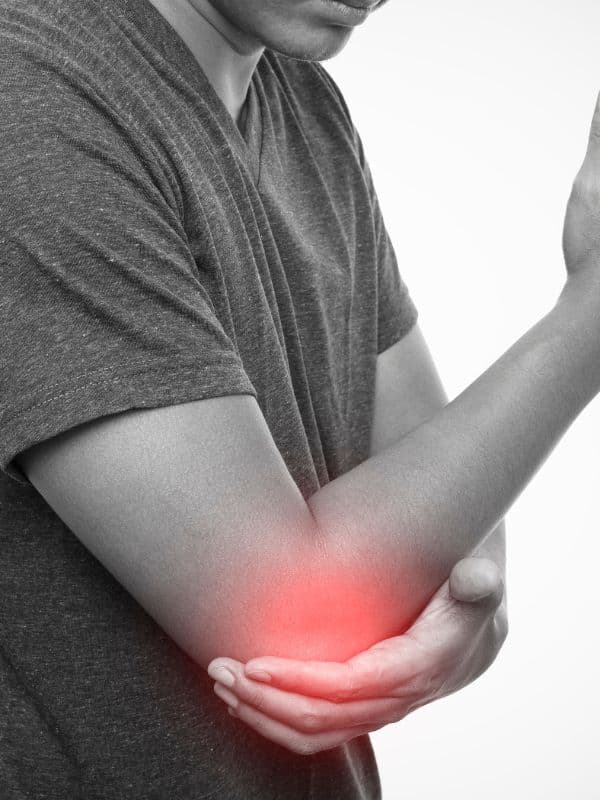
Despite the names, most cases have nothing to do with sport. Both are overuse tendon problems, tennis elbow on the outer elbow where the wrist-extensor tendons attach, golfer’s elbow on the inner elbow where the wrist-flexor tendons attach, and both usually build from repetitive gripping and loading over time. The good news is that because they share the same underlying nature, they respond to the same fundamental approach: a specific, progressive plan to rebuild the tendon’s tolerance for load.
Office and computer workers
Treatment for the forearm and elbow pain that builds through days of typing, mousing, and gripping.
Trade and manual workers
A plan for elbow tendon pain in jobs built on gripping, twisting, and lifting all day.
Racquet and club athletes
Care that treats the tendon and addresses the load and technique factors feeding it.
Elbow and Forearm Conditions We Treat
Most elbow pain from overuse sorts into a few recognizable patterns, and where it hurts points toward the cause. These are the elbow and forearm conditions our physical therapists treat most often at our two Ellicott City clinics:
Dealing with elbow pain that is not on this list? Our clinics treat the full range of orthopedic and sports injuries. Visit our Sports & Orthopedic page or call us to talk through your symptoms.
How Revive Evaluates Elbow Pain
Your first visit is a full one-on-one evaluation with a licensed physical therapist, typically lasting 45 minutes to an hour. We start with your history: exactly where the pain sits, inner or outer elbow, which movements and grips set it off, how it responds to activity and rest, and what in your work, sport, or daily routine has been loading the tendon. That story usually makes the diagnosis clear and, just as importantly, reveals what has been feeding it.
Then we test to confirm the tendon and find the real drivers. Rather than treating only the sore spot on the elbow, we look up and down the chain: your grip strength, wrist and forearm strength, and often your shoulder and posture, because a weak or fatigued shoulder can leave the forearm overworking. Tennis and golfer’s elbow are load problems at heart, so we measure how much your tendon and the muscles around it can currently handle, which becomes the baseline your recovery is built on.
Pain-location confirmation
Confirming inner versus outer elbow and the specific movements that provoke it.
Grip and forearm strength testing
Objective measures of grip and wrist strength, the baseline your loading program builds from.
Upstream contributors
Shoulder, posture, and technique factors that quietly increase the load on your elbow.
Load and activity review
The work, sport, and daily demands driving the tendon overload, so the plan can address them.
What Elbow Pain Treatment Includes
Here is the part that surprises people: resting a cranky elbow tendon usually is not the fix. Tendons recover their strength by being loaded, gradually and specifically, and a tendon that is only rested tends to stay weak and flare again the moment normal gripping resumes. The core of treatment is a progressive strengthening program for the wrist, forearm, and grip, dosed to challenge the tendon enough to rebuild it without pushing it into a flare.
Your program typically combines that progressive loading with hands-on manual therapy to ease pain and improve how the elbow, forearm, and wrist move, work on any shoulder or postural contributors, and practical adjustments to the work and activity habits keeping the tendon overloaded. Our therapists hold advanced certifications in orthopedic manual therapy and dry needling, which can be incorporated when appropriate. As your tendon rebuilds its capacity, we progress you back toward full gripping, lifting, work, and sport.
You also leave every visit with a focused home program, because tendon recovery is won through the consistent, correctly dosed loading you do between sessions.
Progressive tendon loading
The core of treatment: wrist, forearm, and grip strengthening that rebuilds the tendon.
Manual therapy
Hands-on treatment to ease pain and improve elbow, forearm, and wrist mobility.
Upstream and technique work
Addressing shoulder, posture, and technique factors adding to the elbow’s load.
Activity modification
Practical changes to the work and daily habits that keep re-irritating the tendon.
Why One-on-One Care Matters for Elbow Tendon Pain
At many large physical therapy clinics, your therapist may divide attention between multiple patients, with part of the visit spent completing exercises independently. Tendon rehab is a poor match for that, because the entire treatment lives or dies on the loading dose, enough to rebuild the tendon, not so much that it flares, and that dose is read from how your elbow responds week to week. This is exactly why the generic printed exercise sheet so often fails these conditions: the movements are only as good as the dosing behind them, and dosing takes a therapist watching your response.
Ready to treat the elbow the way tendons actually recover?
Book Your EvaluationPhysical Therapists Ellicott City Trusts
Revive Physical Therapy has spent over 15 years helping Ellicott City and Howard County patients recover from pain and injury. Our multidisciplinary team includes doctorate-level physical therapists with advanced credentials in orthopedic manual therapy (COMT), certified integrative dry needling (CIDN), vestibular rehabilitation, and pediatric and adolescent sports medicine, exactly the skill set that progressive tendon rehabilitation demands.
Our clinics also serve as a clinical training site for graduate physical therapy programs across the region, which means our therapists teach the evaluation and treatment standards the next generation of PTs learns from. Meet the team on our Our Team page.
Don’t take our word for it. Read what patients say about their experience at both locations on our Testimonials page, drawn directly from verified Google reviews.
All major insurances are accepted. Visit our Insurances page for details, or call and our team will verify your benefits before your first visit. Paying out of pocket? See our Self Pay options.
Tennis & Golfer’s Elbow: Frequently Asked Questions
Do I need a doctor’s referral to start physical therapy?
As a patient, you have the right to choose your physical therapy provider, and in most cases you can schedule an evaluation with us directly. Some insurance plans do require a physician referral or prescription for coverage, so call us at (410) 988-5171 or (443) 364-3015 and our team will verify your benefits and let you know exactly what your plan requires.
What is the difference between tennis elbow and golfer’s elbow?
They are essentially the same kind of problem on opposite sides of the elbow. Tennis elbow affects the outer elbow, where the tendons that extend the wrist attach, and it hurts most with gripping, lifting, and backhand-type motions. Golfer’s elbow affects the inner elbow, where the wrist-flexor tendons attach, and it flares with gripping and wrist flexion. Both are overuse tendon conditions, and both respond to the same core approach of progressive loading, just applied to different muscles. Your evaluation confirms which one you have, or whether both are involved.
Will it heal on its own if I just rest it?
Often, resting alone is exactly what keeps these conditions dragging on. Rest can calm the pain temporarily, but it does not rebuild the tendon’s capacity, so symptoms tend to return as soon as you resume normal gripping and lifting. The more reliable path is a progressive loading program that gradually restores the tendon’s strength and tolerance. That does not mean pushing through significant pain; it means the right, carefully dosed load, which is what turns a months-long nuisance into a resolving problem.
Do elbow straps, braces, or cortisone injections help?
They have roles, with limits worth understanding. A counterforce strap or brace can reduce symptoms for some people during aggravating tasks and can be a useful short-term aid, but it does not fix the underlying tendon. Cortisone injections are a physician-led option that may ease pain in the short term, though the evidence does not support them for lasting tendon recovery and they are generally not a standalone solution, so it is a conversation to have with your doctor. Across the board, these manage symptoms while progressive loading is what tends to produce durable change, so we build the plan around the loading and use the rest as support where it fits.
Do I have to stop working or playing while it heals?
Usually not entirely. For most people the answer is modified load rather than complete rest, temporarily adjusting the grips, tasks, or technique that most aggravate the tendon while keeping you active and, where possible, working and playing. Your therapist will give you specific guidance based on your job, your sport, and how irritable the tendon is, and will progress you back to full activity as it rebuilds.
What should I expect at the first visit, and how long will recovery take?
Your first visit usually lasts 45 minutes to an hour and includes a full one-on-one evaluation. Tendon problems reward patience: many improve over a span of weeks to months, and longer-standing cases generally take longer, but a well-dosed loading program is aimed at getting you there more reliably and preventing relapse. After the evaluation, your therapist will discuss your recommended number of sessions and give you a realistic timeline with specific milestones, such as pain-free gripping and a return to full work or sport.
Does insurance cover physical therapy for elbow pain?
Coverage varies by plan. Revive Physical Therapy accepts all major insurance plans, and our team can verify your benefits before your first visit. Call either location or visit our Insurances page for more information, and see our Self Pay options if you are paying out of pocket.
Have a question we did not cover here? Our What to Expect page answers common questions about insurance, what to wear, and what to bring to your first appointment.
Related Services at Revive Physical Therapy
Get Your Grip Back
Whether it is the outer-elbow stab every time you lift a mug or the inner-elbow ache after a day of work, the sooner the tendon gets the right kind of care, the sooner your grip stops letting you down. With appointments available within 24 hours at both Ellicott City locations, there is no reason to work around it for another month.
Book Your EvaluationNot sure if physical therapy is right for you? Ask about our free 15-minute consultation.
(410) 988-5171 Baltimore National Pike | (443) 364-3015 Waterloo Road