

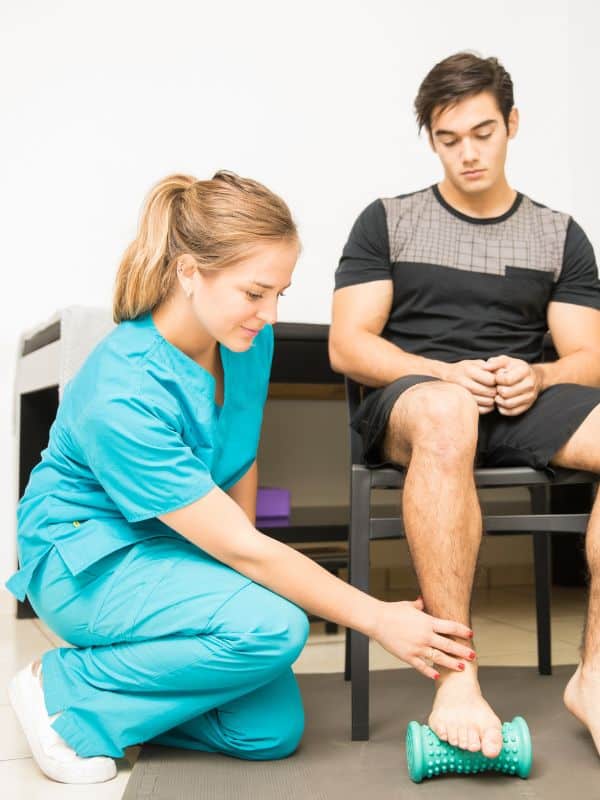
Plantar Fasciitis Treatment in Ellicott City, MD
Plantar fasciitis announces itself the same way for almost everyone: the first steps out of bed feel like a nail under the heel, then it fades, then it comes back after you sit. It is the most common cause of heel pain, and also one of the most commonly mistreated, which is why so many people limp along with it for months. At Revive Physical Therapy, you work one-on-one with a licensed physical therapist who treats the actual cause, not just the sore spot. With appointments within 24 hours, weekend hours, and two Ellicott City locations, the fix can start this week.
Request Your Evaluation
Who Our Plantar Fasciitis Program is For
Our plantar fasciitis program serves adults across Ellicott City and Howard County dealing with that stubborn under-heel pain: the worker who is on hard floors all day, the runner whose heel flares as mileage climbs, the person who recently added a lot of walking or gained the pounds that changed how much their feet carry, and the many people who have been fighting it for months with rest, inserts, and stretching that never quite worked.
Plantar fasciitis is fundamentally a load problem. The tissue on the bottom of your foot, the plantar fascia, got asked to handle more than it was ready for, whether that was a spike in activity, long hours standing, reduced calf and foot strength, or some combination. That is also the good news: because it is a load-and-capacity problem, it responds to a plan that manages the load and rebuilds the capacity, which is exactly what this program does, as part of our broader Foot Pain care at both locations.
Workers on hard floors
A plan built for people who cannot simply stop standing and walking all day while the heel recovers.
Runners and walkers
Load management and strengthening that lets you keep moving while the fascia rebuilds its tolerance.
People months into it already
A different approach for the stubborn cases that rest, inserts, and generic stretches have not resolved.
Plantar Heel Pain: What We Look At and Treat
Plantar fasciitis is the usual cause of under-heel pain, but not the only one, and the details of your case shape the plan. These are the plantar heel and related presentations our physical therapists treat most often at our two Ellicott City clinics:
Not sure your heel pain is plantar fasciitis? The evaluation confirms it and rules out the look-alikes. You can also read about the full range of foot conditions we treat on our Foot Pain page.
How Revive Evaluates Plantar Fasciitis
Your first visit is a full one-on-one evaluation with a licensed physical therapist, typically lasting 45 minutes to an hour. We start with your history: exactly where the pain sits, the classic morning first-step pattern, how it responds to activity and rest, your footwear, your job, and what changed, more miles, more hours, new shoes, before it began. Plantar fasciitis usually has a recognizable story, and confirming it also means ruling out the other causes of heel pain that need different treatment.
Then we look at why the fascia got overloaded. Rather than only treating the tender heel, we assess the whole system feeding it: your calf strength and flexibility, your foot strength, your ankle mobility, and how you load the foot when you walk and rise onto your toes. A calf that is tight or weak, or an ankle that will not bend enough, sends extra load straight through the heel with every step, and those are the findings that turn a temporary fix into a lasting one.
Pattern confirmation
Confirming the classic plantar fasciitis picture and ruling out other causes of heel pain.
Calf strength and flexibility
Testing the calf, a frequent hidden driver, since it shapes how much load reaches the heel.
Foot strength and heel-raise capacity
How much your foot and calf can actually do, measured as your baseline for progress.
Loading and footwear review
How you load the foot when you move, plus whether your shoes and activity fit your current capacity.
What Plantar Fasciitis Treatment Includes
Here is the piece most people miss: plantar fasciitis rarely resolves through rest and stretching alone, because those do not rebuild the tissue’s capacity to handle load. The most reliable ingredient in modern treatment is progressive strengthening, particularly loading the calf and foot in ways that build the fascia’s tolerance, combined with managing your daily load so the tissue is challenged enough to adapt but not so much that it stays angry.
Your program typically combines hands-on manual therapy for calf and foot stiffness, a specific progressive loading program for the calf and foot, targeted work on ankle mobility where it is limited, and practical load management for your work, walking, and running. Where a supportive shoe or an off-the-shelf insert would genuinely help in the short term, we will guide you, as one supporting piece rather than the whole treatment. Our therapists hold advanced certifications in orthopedic manual therapy and dry needling, which can be incorporated when appropriate. As you improve, we progress you back toward full standing, walking, and running.
You also leave every visit with a focused home program, because plantar fasciitis is won through consistent, correctly dosed loading between sessions more than almost any foot condition.
Progressive calf and foot loading
The core of treatment: strengthening that rebuilds the tissue’s tolerance for load.
Manual therapy
Hands-on treatment for the calf, foot, and ankle stiffness contributing to your heel load.
Load management
A week-by-week plan for standing, walking, and running that keeps you moving while the fascia adapts.
Footwear guidance
Short-term support and insert advice where it fits, as one piece of the plan rather than the fix.
Why One-on-One Care Matters for Plantar Fasciitis
At many large physical therapy clinics, your therapist may divide attention between multiple patients, with part of the visit spent completing exercises independently. Plantar fasciitis is a condition where that difference decides the outcome. The whole treatment hinges on loading the tissue correctly, enough to build tolerance, not so much that it flares, and that dose is judged from how your heel responds week to week. It is also why the generic printed handout so often fails: the exercises are only as good as the dosing behind them, and dosing takes a therapist paying attention to your response.
Ready to actually fix the heel pain instead of managing it another month?
Book Your EvaluationPhysical Therapists Ellicott City Trusts
Revive Physical Therapy has spent over 15 years helping Ellicott City and Howard County patients recover from pain and injury. Our multidisciplinary team includes doctorate-level physical therapists with advanced credentials in orthopedic manual therapy (COMT), certified integrative dry needling (CIDN), vestibular rehabilitation, and pediatric and adolescent sports medicine, exactly the skill set that loading-based plantar fasciitis treatment demands.
Our clinics also serve as a clinical training site for graduate physical therapy programs across the region, which means our therapists teach the evaluation and treatment standards the next generation of PTs learns from. Meet the team on our Our Team page.
Don’t take our word for it. Read what patients say about their experience at both locations on our Testimonials page, drawn directly from verified Google reviews.
All major insurances are accepted. Visit our Insurances page for details, or call and our team will verify your benefits before your first visit. Paying out of pocket? See our Self Pay options.
Plantar Fasciitis: Frequently Asked Questions
Do I need a doctor’s referral to start physical therapy?
As a patient, you have the right to choose your physical therapy provider, and in most cases you can schedule an evaluation with us directly. Some insurance plans do require a physician referral or prescription for coverage, so call us at (410) 988-5171 or (443) 364-3015 and our team will verify your benefits and let you know exactly what your plan requires.
How long does plantar fasciitis take to heal?
Honestly, it is often a patient condition, frequently improving over a span of months rather than weeks, especially once it has been present a while. The encouraging part is that the right treatment, progressive loading plus sensible load management, is aimed at shortening that course and, just as importantly, keeping it from coming back. Cases caught earlier and cases where the calf and foot are strengthened tend to do better. Your therapist will give you an honest read on your timeline based on how long you have had it and what your evaluation shows.
Is my heel pain caused by a heel spur?
Almost certainly not, even if one showed up on an X-ray. Heel spurs are very common in people with completely pain-free feet, and plenty of people with plantar fasciitis have no spur at all, so the spur is usually a bystander rather than the cause. This matters because it changes the plan: the target is the overloaded plantar fascia and the calf and foot mechanics behind it, not a bony bump that was likely there long before your pain started and will still be there after it resolves.
Do night splints, inserts, or cortisone injections work?
Each can play a role for some people, and none is a standalone cure. Night splints and off-the-shelf inserts help certain patients manage symptoms, particularly early on, and can support the main work of loading and strengthening. Cortisone injections are a physician-led option that may reduce pain for a time, though repeated injections carry their own downsides, which is a conversation for you and your doctor. The throughline is that these address symptoms, while rebuilding the tissue’s capacity through progressive loading is what tends to produce lasting change, so we build the plan around that and use the rest as support where it fits.
What should I expect at the first visit, and how long will recovery take?
Your first visit usually lasts 45 minutes to an hour and includes a full one-on-one evaluation. Recovery time depends on how long you have had it, how much load your feet face daily, and your calf and foot strength; longer-standing cases generally take more patience. After the evaluation, your therapist will discuss your recommended number of sessions and give you a realistic timeline with specific milestones, such as when to expect easier mornings and a return to full walking, standing shifts, or running.
Does insurance cover physical therapy for plantar fasciitis?
Coverage varies by plan. Revive Physical Therapy accepts all major insurance plans, and our team can verify your benefits before your first visit. Call either location or visit our Insurances page for more information, and see our Self Pay options if you are paying out of pocket.
Have a question we did not cover here? Our What to Expect page answers common questions about insurance, what to wear, and what to bring to your first appointment.
Related Services at Revive Physical Therapy
Make the First Step Out of Bed Painless Again
Whether your heel pain is brand new or has dragged on for months through every insert and stretch you have tried, the path out is a plan that rebuilds what the fascia lost. With appointments available within 24 hours at both Ellicott City locations, there is no reason to dread your mornings for another week.
Book Your EvaluationNot sure if physical therapy is right for you? Ask about our free 15-minute consultation.
(410) 988-5171 Baltimore National Pike | (443) 364-3015 Waterloo Road