
Golf Injury Physical Therapy in Ellicott City, MD
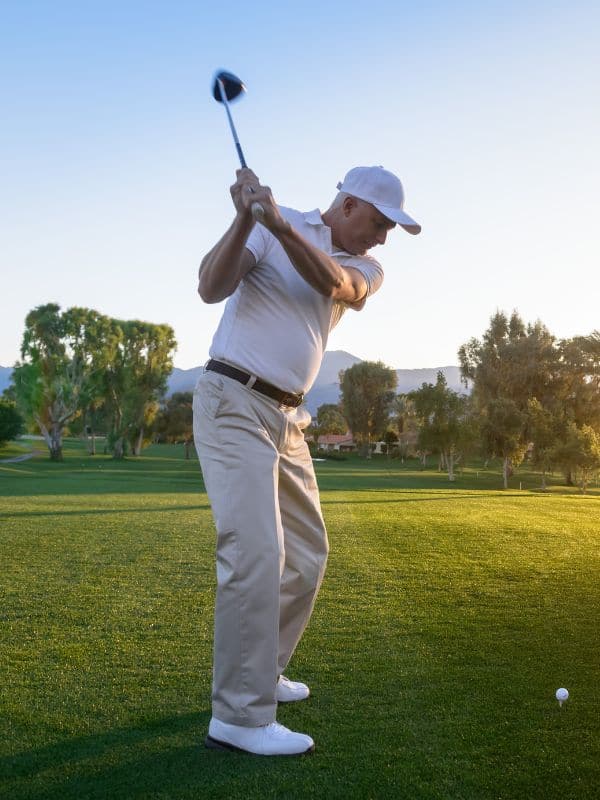
The golf swing asks your body to produce rotation at speed, over and over, in the same direction, and when your hips or mid-back cannot supply that rotation, your lower back and elbows pay for it. At Revive Physical Therapy, you work one-on-one with a licensed physical therapist who evaluates how your body produces your swing, not just the spot that hurts. With appointments within 24 hours, weekend hours, and two Ellicott City locations, getting evaluated will not cost you a weekend on the course.
Request Your Evaluation
Who Our Golf Injury Program is For
Our golf injury physical therapy program serves golfers of every level across Ellicott City and Howard County, from weekend players and league regulars to competitive amateurs and junior golfers. Golf injuries are overwhelmingly overuse injuries: the swing repeats the same rotational demand hundreds of times between the course and the range, and small limitations in mobility or strength get magnified with every repetition.
We see a lot of golfers who have already tried the usual fixes: rest that helped until the second round back, a brace, a new grip. What most have not had is someone evaluate where their swing’s rotation actually comes from, and what happens when a stiff mid-back or a lead hip that will not rotate forces other joints to make up the difference. That evaluation is where lasting relief starts.
Weekend and league golfers
Care that keeps you playing while you recover, instead of choosing between your Saturday round and getting better.
Senior golfers
A realistic plan for keeping the mobility and strength your swing depends on, so you stay on the course for years to come.
Junior and competitive golfers
Rehab and load guidance for high-volume practice schedules, drawing on our therapists’ pediatric and adolescent sports experience.
Golf Injuries We Treat
Golf concentrates rotational load on the spine, hips, and arms, and most golf injuries cluster in predictable places. These are the golf injuries our physical therapists treat most often at our two Ellicott City clinics:
Dealing with pain that is not on this list? Our clinics treat the full range of orthopedic and sports injuries. Visit our Sports & Orthopedic page or call us to talk through your symptoms.
How Revive Evaluates Golf Injuries
Your first visit is a full one-on-one evaluation with a licensed physical therapist, typically lasting 45 minutes to an hour. We start with your golf history: rounds and range sessions per week, recent changes in volume or equipment, where in the swing or the round your pain shows up, and what you have already tried.
Then we watch you move. Rather than only treating the painful spot, we evaluate how you move to identify the root cause of the problem. For golfers, that means assessing where your rotation comes from: how much your hips rotate, how much your mid-back contributes, and what your body does when either runs out. A lead hip that will not internally rotate or a stiff thoracic spine can shift the swing’s rotational demand onto the low back and elbows, and those trade-offs are usually only visible when your therapist assesses the movements your swing is built from.
Rotation assessment
Hip and mid-back rotation measured to see where your swing’s motion comes from and where it is running out.
Golf and training history
A full picture of rounds, range volume, and recent changes, because spikes in volume drive most overuse injuries.
Strength and mobility testing
Objective measures of hip, core, and grip strength so progress is tracked with numbers, not guesswork.
Movement trade-off analysis
Identifying which joints are compensating for the mobility or strength another joint is not supplying.
What Golf Injury Treatment Includes
Every plan is individualized around one goal: a durable recovery that gets you back to full, comfortable rounds, not just temporarily out of pain. Telling a golfer to “just take a few weeks off” rarely solves the problem, because the pain usually returns a few rounds after you do. Instead, we modify your playing and practice volume so you stay on the course as much as safely possible while the injured tissue recovers.
Your program typically combines hands-on manual therapy to restore the joint and soft tissue mobility your swing depends on, progressive strengthening for the hips, core, and grip, and movement retraining to rebuild the rotation your swing has been missing. Our therapists hold advanced certifications in orthopedic manual therapy and dry needling, which can be incorporated into your plan when appropriate. As you improve, we build a graded return-to-golf progression, from putting and chipping through half swings, full swings, and finally complete rounds.
To be clear about what we do and do not do: we restore your body’s capacity to rotate, stabilize, and repeat your swing without pain. Technique itself is your golf professional’s territory, and the two work well together. Golfers often find that once the mobility returns, swing changes their pro has been asking for finally become physically possible.
Manual therapy
Hands-on treatment for the hip, spine, and elbow restrictions limiting your swing.
Golf-specific strengthening
Hip, core, and grip work matched to the rotational and repetitive demands of the swing.
Load management
A week-by-week plan for rounds and range sessions, so playing continues while tissue recovers.
Return-to-golf progression
Clear criteria for when to add back full swings, driver, and complete rounds.
Why One-on-One Care Matters for Golfers
At many large physical therapy clinics, your therapist may divide attention between multiple patients, with part of the visit spent completing exercises independently. For golfers, close observation can be especially valuable. The difference between rotation produced by the hips and rotation forced through the low back is subtle, and correcting that trade-off requires a therapist who is watching how you move throughout the session.
Ready to find out what your swing is asking of a body that cannot deliver it yet?
Book Your EvaluationPhysical Therapists Golfers Can Trust
Revive Physical Therapy has spent over 15 years helping Ellicott City and Howard County patients recover from pain and injury. Our multidisciplinary team includes doctorate-level physical therapists with advanced credentials in orthopedic manual therapy (COMT), certified integrative dry needling (CIDN), vestibular rehabilitation, and pediatric and adolescent sports medicine, exactly the skill set the rotational demands and repetitive loading of golf require.
Our clinics also serve as a clinical training site for graduate physical therapy programs across the region, which means our therapists teach the evaluation and treatment standards the next generation of PTs learns from. Meet the team on our Our Team page.
Don’t take our word for it. Read what patients say about their experience at both locations on our Testimonials page, drawn directly from verified Google reviews.
All major insurances are accepted. Visit our Insurances page for details, or call and our team will verify your benefits before your first visit. Paying out of pocket? See our Self Pay options.
Golf Injury Physical Therapy: Frequently Asked Questions
Do I need a doctor’s referral to start physical therapy?
As a patient, you have the right to choose your physical therapy provider, and in most cases you can schedule an evaluation with us directly. Some insurance plans do require a physician referral or prescription for coverage, so call us at (410) 988-5171 or (443) 364-3015 and our team will verify your benefits and let you know exactly what your plan requires.
Can I keep playing golf while I go through physical therapy?
Usually, yes. For most golf injuries, the answer is modified golf rather than no golf, for example limiting range volume, playing nine instead of eighteen, or temporarily easing off the driver while the injured tissue recovers. Your therapist will give you specific guidance based on your injury and your playing schedule.
Should I see a physical therapist or take a lesson with my golf pro?
They solve different problems, and often the answer is both. A golf professional refines your technique. A physical therapist restores your body’s capacity to perform that technique: the hip rotation, mid-back mobility, and strength your swing draws on. If pain is involved, or if a swing change your pro keeps asking for feels physically impossible, start with the evaluation, because no lesson can teach a movement your joints cannot yet produce.
Why does my low back hurt when I golf?
The golf swing demands a lot of rotation, and when the hips and mid-back cannot supply enough of it, the low back often makes up the difference, a job it is not built to do hundreds of times a week. Volume spikes, like a full league season starting after a winter off, are a common trigger. An evaluation can identify where your rotation is coming up short so treatment addresses the cause rather than only the sore spot.
What should I expect at the first visit, and how long will recovery take?
Your first visit usually lasts 45 minutes to an hour and includes a full one-on-one evaluation. Recovery time depends on the injury, how long it has been present, and your playing schedule. After the evaluation, your therapist will discuss your recommended number of sessions and give you a realistic timeline with specific milestones, such as when to expect a return to full swings and complete rounds.
Does insurance cover physical therapy for golf injuries?
Coverage varies by plan. Revive Physical Therapy accepts all major insurance plans, and our team can verify your benefits before your first visit. Call either location or visit our Insurances page for more information, and see our Self Pay options if you are paying out of pocket.
Have a question we did not cover here? Our What to Expect page answers common questions about insurance, what to wear, and what to bring to your first appointment.
Related Services at Revive Physical Therapy
Get Back to Full Rounds Without the Ache
Whether it is a low back that tightens by the twelfth hole or an elbow that complains the morning after every range session, the sooner it is evaluated, the sooner you are back to comfortable golf. With appointments available within 24 hours at both Ellicott City locations, there is no reason to play through the pain another weekend.
Book Your EvaluationNot sure if physical therapy is right for you? Ask about our free 15-minute consultation.
(410) 988-5171 Baltimore National Pike | (443) 364-3015 Waterloo Road